From Classic Masterpieces To A New Society: How Can We Guarantee The Three Basic Needs?
The Struggle In Black Spain And The Vision For A New Society
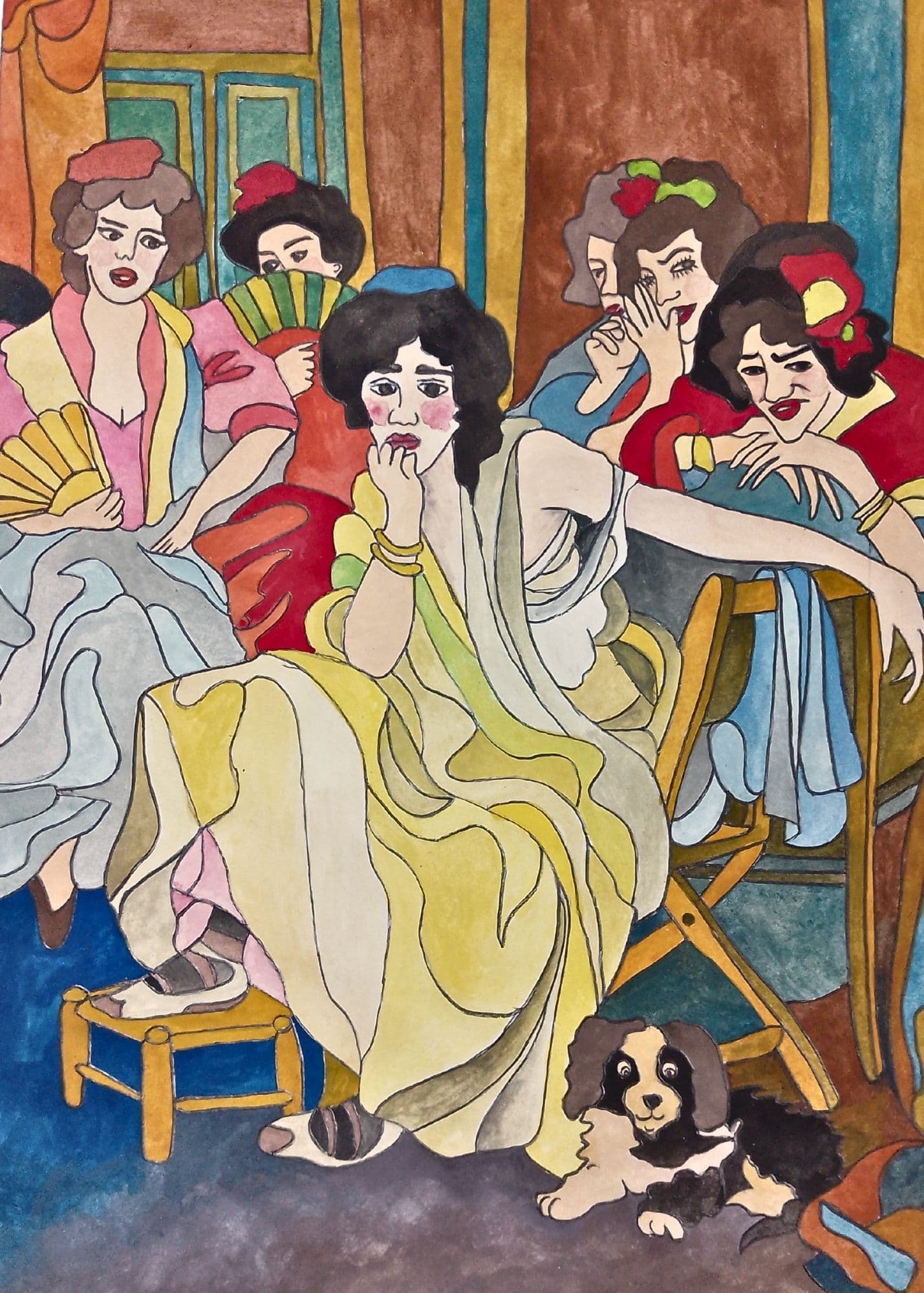
Solana painted this artwork during the Black Spain period. In the 1920s, most people lived in deep poverty, especially women like these choir women. They couldn’t find enough food to feed themselves, and they had to eat “garbanzo,” namely chickpea soup, every day. You can see the dog at the bottom right of the painting. It represents a safe shelter and loyalty, which the choir girl couldn’t find in her lifetime.
Every painting and historical event should be explained from the perspective of the three basic needs. We have a lot of women like the choir woman in the yellow dress, and we can build a society for every one of them. How can we do it? We have lands that no one uses; we have plants. We can build living spaces from natural materials, cultivate food forests, and establish a school for education about the meaning of life. What was the best education for the choir girls, their slave owners, and every one of us, whether we are a slave or a slave owner? The “love your neighbor as yourself” education can guarantee food, safe shelter, and a good environment for every one of us.
This is a marathon in our era. We can build a society for our next generation. We can start simply on our social media and in online conferences. I am a volunteer for it. You can start to support me in building a “love your neighbor as yourself” school through food from a food forest, safe shelter from natural materials, and the meaning of life. We are guests on this earth, and we can pass through this world while singing a beautiful song.
Edvard Munch's Silent Cry And The Quest For A Good Environment
While the original masterpiece does not feature a sheep, I felt compelled to include one in my drawing. Edvard Munch was deeply haunted by the proximity of a slaughterhouse to the bridge in Oslo. He was a fragile young man, shaped by the traumatic experiences of his youth. Having lost both his mother and sister to devastating illnesses, he never found sanctuary in a healthy environment.
What defines a 'good environment'? For Munch, it would have been a world where he could eat without the echoes of slaughtered livestock, and live in a serene home protected from the damp, freezing air. In the painting, he covers his ears to block the horrific noise of the nearby killing center. He opens his mouth in a silent cry to explain how the moldy walls of their home led his family to perish from tuberculosis. Edvard Munch’s struggle reminds us that we all require the three basic needs: nourishment, secure shelter, and a wholesome society governed by the divine mandate to "love your neighbor as yourself."
What Is The Meaning Of Life? Our Shared Mission For Humanity
I have an aim. This aim is very big and clear, but it is not compatible with the current system and my ideals. I support food for everyone, safe shelter for everyone, and education about the meaning of life. This aim sounds easy, but some people can ask, "What is the meaning of life?" This question is very important for me because there is only one answer to it: “Love your neighbor as yourself.” This is the meaning of life. We won’t be able to love our neighbor perfectly as ourselves, but the meaning of life is this: namely, one should try to do it again and again.
Do you remember illustrated stories from your childhood? There were some rabbits in beautiful illustrations with cozy clothes and living spaces like people in those storybooks. This is one of our main common needs. We know what our needs are: food, safe shelter, and a good environment. We want to live in a peaceful house, and we want to be sure that we have enough food. Our neighbors should be good people; at least they won’t want to steal our food or shelter, and maybe our wife, husband, or our children!
This is my mission: I want to explain what the meaning of life is through my illustrations that are inspired by real art paintings, historical events, or economic struggles.
Sometimes I want to buy a carpet like the mother rabbit’s carpet, but I give up immediately. Because I don’t feel that this is my home, this is my country, this is my world. I need a reason, like all of humanity having food, safe shelter, and a good environment where society lives by the rule “love your neighbor as yourself”.
Johannes Vermeer's Tragedy And The Dream Of A Food Forest School
This illustration is inspired by Vermeer's painting titled The Love Letter. Vermeer lived in Holland during the 17th century. While he was a respected artist, his financial situation collapsed due to the Franco-Dutch War in 1672, which caused a severe economic crisis. He lost his ability to sell paintings and fell into deep poverty and stress, which led to his death. He left behind a wife, eleven children, and a household in massive debt.
Vermeer required a guarantee of food, safe shelter, and a stable environment. This environment should have been a society where people lived by the rule, "Love your neighbor as yourself."
Every economic problem stems from a lack of guarantee for these three basic needs.
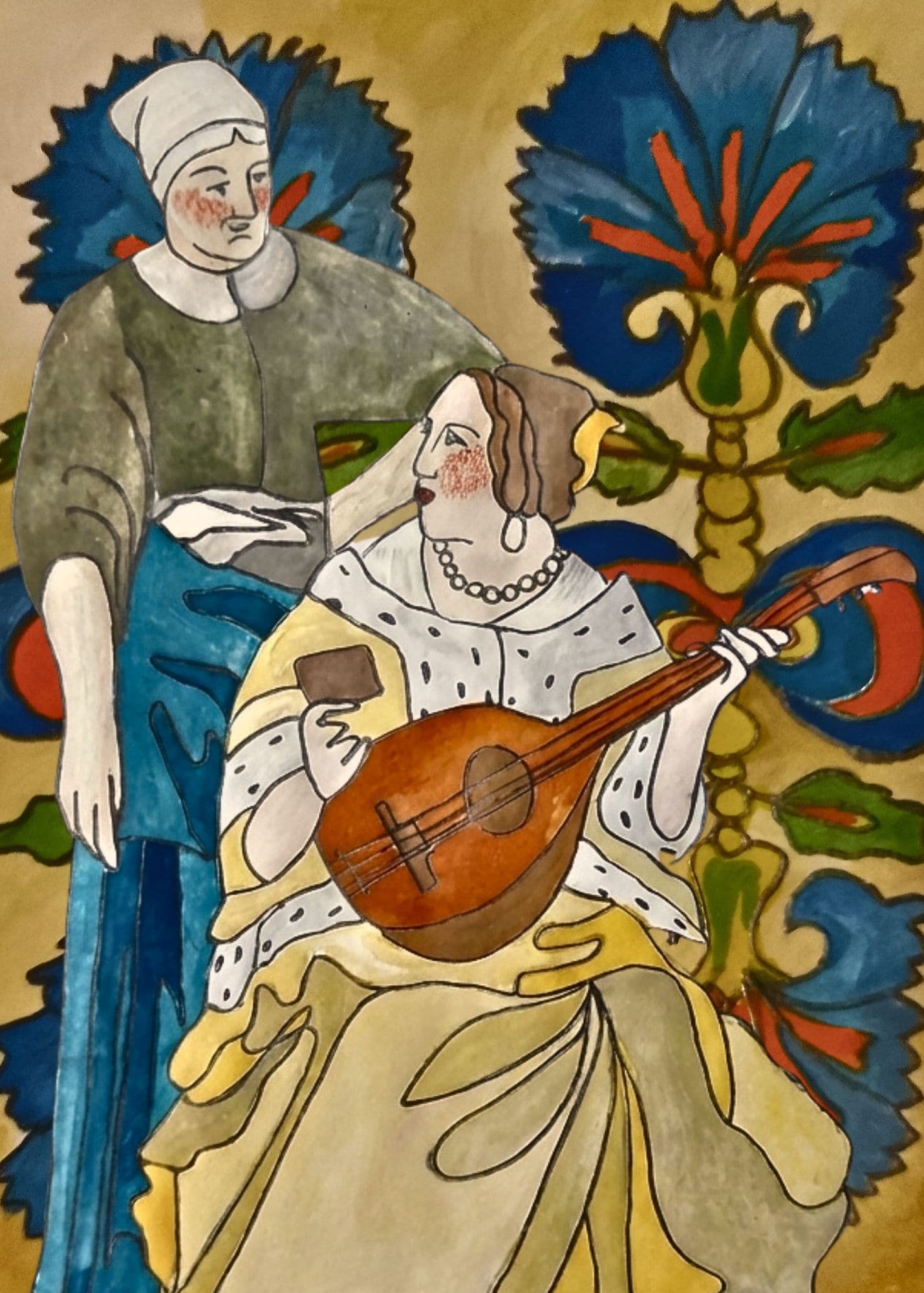
In his paintings, there are beautiful dresses, servants, music, and art, reflecting a world of comfort. But when the war came, everything changed, and he did not know how to manage a household economy in such a time of crisis.
I created an illustration inspired by Vermeer because I want to establish a school based on the principle of "Love your neighbor as yourself." This school should be located within a food forest, with a building to display my illustrations and their stories. We should describe every word, every painting, and every historical event through the perspective of the three basic needs.